
 Corn
Corn
To successfully grow corn, agronomists should consider which micronutrients are most important for proper growth and development of the crop. Here they are:
Zinc. One of the most important nutrients for corn. Zinc is not only involved in the synthesis of chlorophyll and several vitamins in plants, but also increases the resistance of corn to temperature stress (in particular, frost and sudden changes in atmospheric temperature).
Manganese. An element that plays an important role in the processes of photosynthesis and protein synthesis in the plant. Affects the recovery of nitrates, as well as activates some enzymes, thus significantly affecting plant metabolism. It is not recommended to add manganese to the soil due to its low assimilation by plants and the negligible effect of such applications.
Boron. It not only plays an important role in carbohydrate metabolism, but also regulates the synthesis of plant growth stimulants and inhibitors. Boron promotes better absorption of calcium and nitrogen by plants. It is involved in cell division and cell membrane formation, has an effect on flower fertilization and pollen formation.
Iron. An important element for plant life, which is actively involved in the synthesis of proteins and chlorophyll, as well as in photosynthesis. The risk of iron deficiency occurs, in particular, on poorly drained soils, which should be considered when planning the cultivation of corn.
Copper. Activates redox processes, due to which it is an important factor in the content of protein and sugar in corn grain. Participates in the synthesis of lignin by the cell wall, increases the activity of grain production.
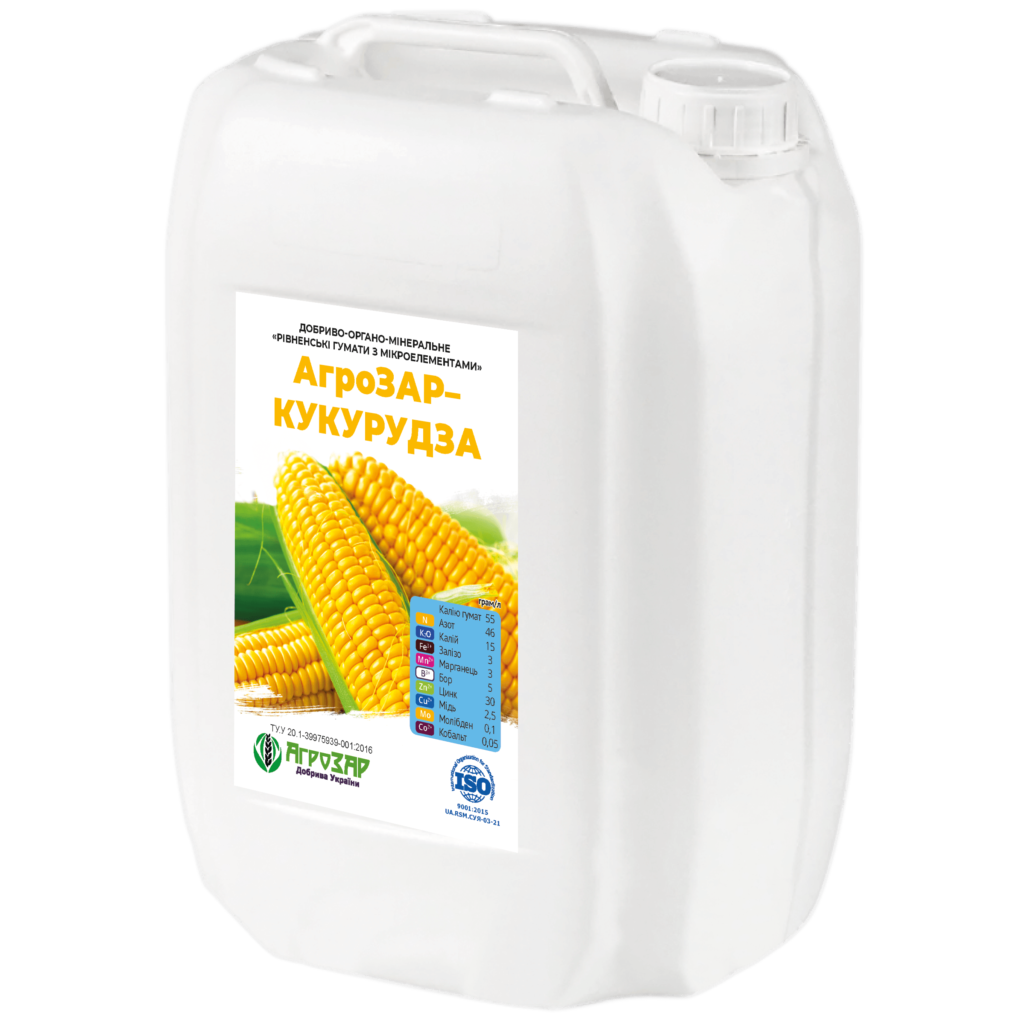
Microfertilizer for foliar feeding of corn. Has a high content of zinc which is involved in the synthesis of chlorophyll and vitamins in plants, as well as increases the resistance of plants to temperature stress.
| Potassium humate | Nitrogen | (К2О) | (Fe) | (Mn) | (В) | (Zn) | (Cu) | (Мо) | (Со) |
| 55 | 46 | 15 | 3 | 3 | 5 | 30 | 2,5 | 0,1 | 0,05 |
g per liter*
Вefore application, dilute with water at the rate of (100-300) liters per 1 liter of fertilizer.
COMPATIBILITY WITH OTHER DRUGS should be checked before use. The fertilizer may be incompatible with drugs that form an acidic environment in solutions.
STORE indoors, out of reach of children, in the manufacturer’s container at a temperature of 0 to + 35 C.
WARNING: do not apply for fertilization two weeks before harvest.
| Culture | Application periods | Consumption rate per application, l / ha |
| Corn | From 3 to 5 blossoming leaves. |
1,0 – 1,5 |
| From 6 to 8 blossoming leaves. |

