
 Corn
Corn
 Fruits
 Potato
 Vegetables
 Wheat
Wheat
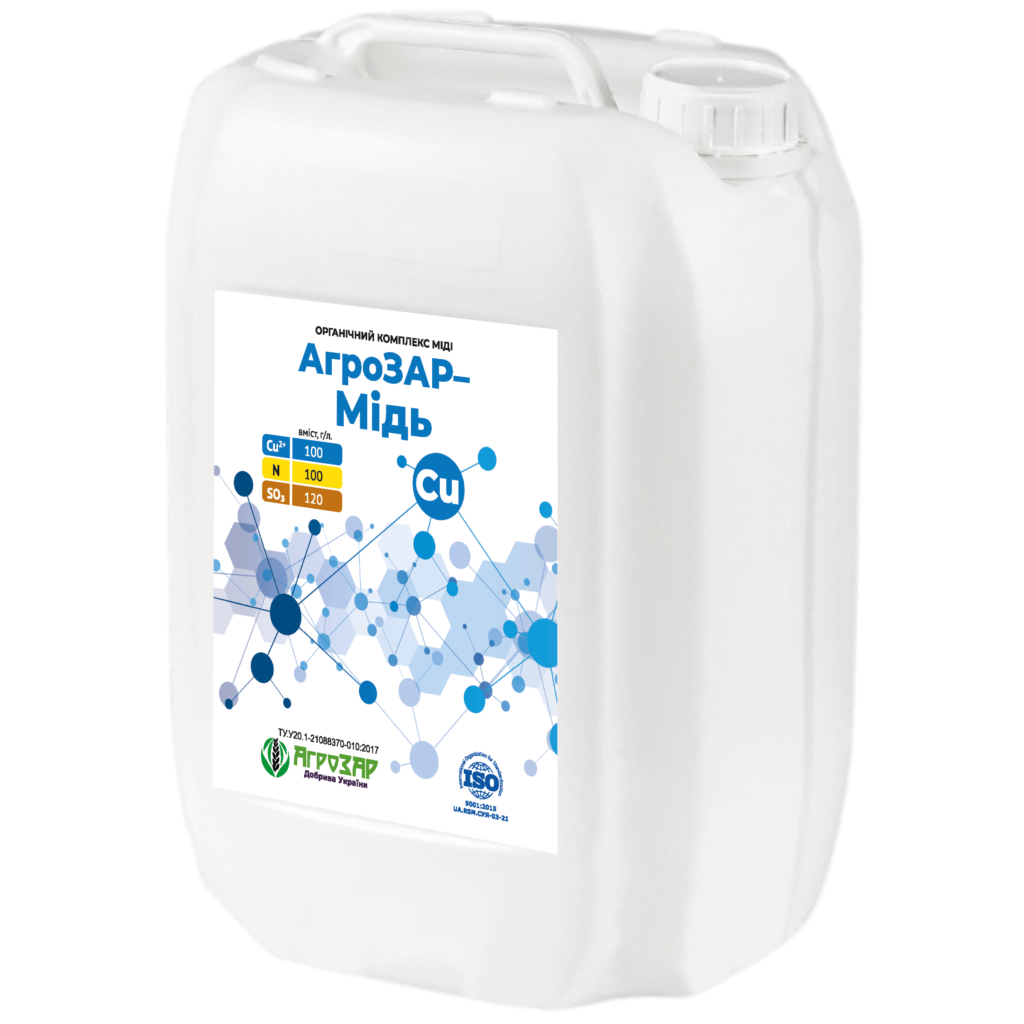
Copper is part of enzymes, activates carbohydrate and protein metabolism. Consisting of
proteins, it is responsible for binding solar energy; has a positive effect on photosynthesis and
protein synthesis; increases the intensity of respiration of crops; reduces the intensity of decay
chlorophyll; increases the resistance of cultures to fungal and bacterial diseases; improves:
crop resistance to dormancy, air drought and winter hardiness; contributes to the better
assimilation of nitrogen compounds.
Copper is part of enzymes and participates in redox transformations,
about 50% of it is contained in chloroplasts.
In the case of copper deficiency, lignification of cell walls is disturbed, the intensity decreases
respiration and photosynthesis. Signs of copper starvation appear most often on
peaty and acidic sandy soils.
The lack of this trace element causes delayed growth and flowering in plants, chlorosis of leaves,
loss of cell elasticity (withering of plants). For acute copper deficiency in cereal plants
whitening of the tips of the leaves, underdevelopment of the ear, excessive bushing (especially in
oats, barley, beets, onions and legumes), drying of shoots in fruit crops. The crown of trees acquires
bushy in shape, the fruits become small with brown spots and warts. “Disease
processing” of herbaceous plants manifests itself in the drying of the tips of the leaves, delay in
formation of reproductive organs, empty grains of the ear. For this disease
the plants are stunted and, without entering the stemming phase, die.
| (Cu) | (N) | (SO3) |
| 100 | 100 | 120 |
grams per liter*
Before application, dilute with water at the rate of (100-300) liters per 1 liter of fertilizer.
COMPATIBILITY WITH OTHER DRUGS should be checked before use. The fertilizer may be incompatible with drugs that form an acidic environment in solutions.
STORE indoors, out of reach of children, in the manufacturer’s container at a temperature of 0 to + 35 C.
WARNING: do not apply for fertilization two weeks before harvest.
| Culture | Application periods | Consumption rate per application, l / ha |
| spring cereals | After tillering; |
0,5 |
| At the beginning of the inflorescences. | ||
| Corn | In the presence of (7-8) leaves | 0,5 |
| Potatoes | At the beginning of flowering | 0,5 |
| Vegetable crops | The beginning of the appearance of leaves; |
0,5 |
| Beginning of flowering; | ||
| The beginning of fruit growth. | ||
| Fruit trees | The first – at the beginning of flowering; | 1,0 |
| Further 2-3 – during the growing season. |

