
 Fruits
 Garden and vegetables
 Potato
 Raspberry
 Vegetables
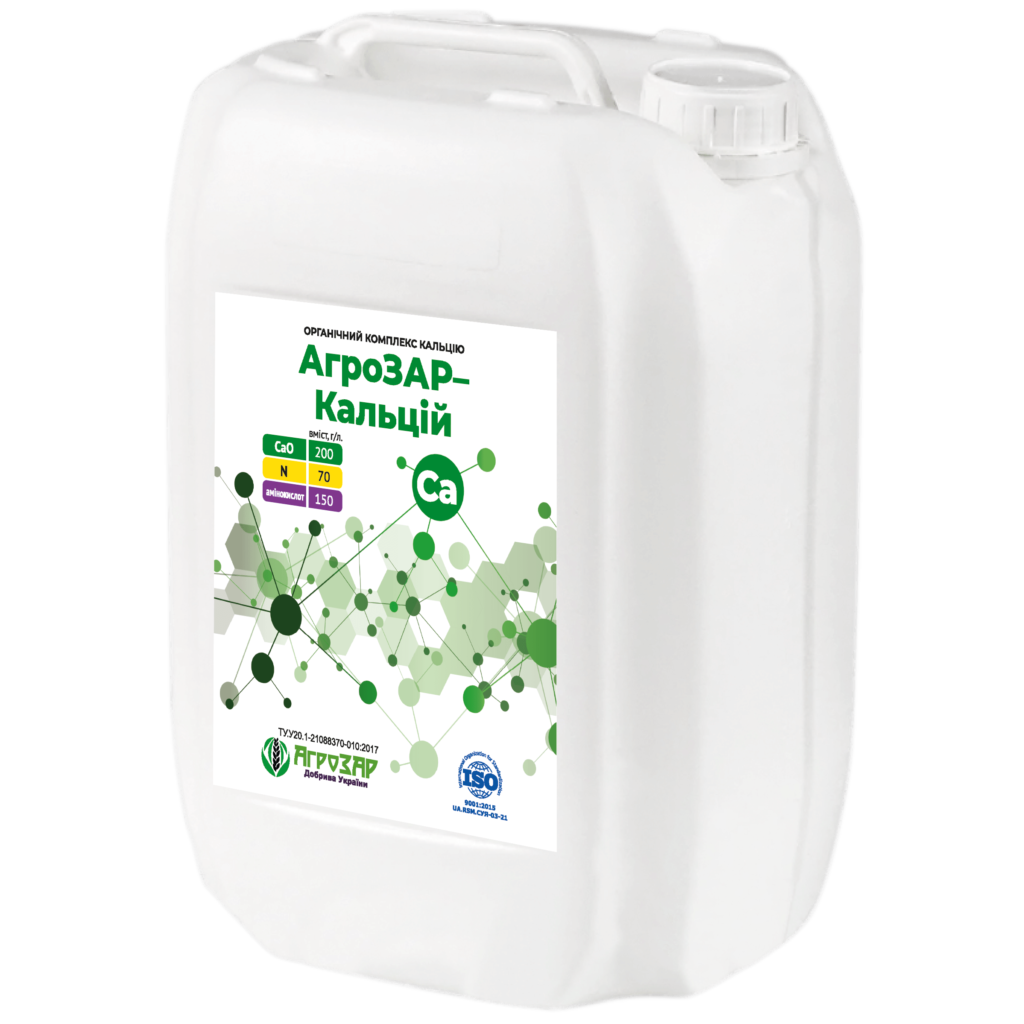
Concentrated easily digestible liquid chelate fertilizer is intended for foliar feeding of mainly vegetable and fruit crops. The role of calcium is closely related to photosynthesis, as it improves the synthesis of chlorophyll. Calcium activates enzymes, enhances metabolism, has a positive effect on the conversion of nitrogen-containing compounds in plants
Calcium is needed for the normal growth of aerial organs and plant roots. The need for calcium is already evident in the germination phase. With a strong deficiency of calcium, the roots stop growing, thicken, and the root hairs are destroyed (cell walls become slippery, because pectin substances and lipoids dissolve in the absence of calcium, cell contents leak out, the tissue turns into a slimy, structureless mass).
Calcium ensures the good development of the root system, contributing to the formation of a greater number of root hairs, with the help of which the bulk of water and nutrients dissolved in it enters the plants from the soil.
Calcium is needed by the plant constantly, it accumulates in old leaves and cannot be reused, so young leaves become covered with light yellow spots (chlorosis) and die.
The role of calcium is closely related to photosynthesis, as it improves the synthesis of chlorophyll. Calcium activates enzymes, increases metabolism, positively affects the process of transformation of nitrogen-containing compounds in plants.
An important role belongs to calcium in the creation of cell membranes, maintenance of acid-alkaline balance (buffering) in plant organisms.
It affects the exchange of carbohydrates, proteins, ensuring their better transportation; is part of pectin substances and some other organic compounds; neutralizes heavy metals in the soil; increases the viscosity of the cytoplasm, thereby contributing to a better heat bone of plants.
| (СаО) | (N) | Amino acids |
| 200 | 110 | 150 |
grams per liter*
COMPATIBILITY WITH OTHER DRUGS SHOULD BE CHECKED BEFORE USE. The fertilizer may be incompatible with drugs that form an acidic environment in solutions.
STORE indoors, out of reach of children, in the manufacturer’s container at a temperature of 0 to + 35C.
WARNING: do not apply for fertilization two weeks before harvest.
| Culture | Phases of plant development in which foliar fertilization is recommended | The rate of consumption of the drug for one application, l/ha |
| Fruit seeds
(apples, pears) |
From the beginning of fruit growth to the beginning of harvesting with an interval of (7-10) days | 3,0 – 6,0 |
| Fruit drupe
(apricot, plum, peach) |
From the beginning of the growth of the ovary to the beginning of harvesting with an interval of (7-10) days | 3,0 – 5,0 |
| Fruit bushes (gooseberry, raspberry, currant, currant) | From the beginning of fruit formation to the end of their ripening with an interval of (7-10) days | 3,0 – 4,0 |
| Strawberry | From the end of flowering to the beginning of harvest | 3,0 – 4,0 |
| Tomatoes, peppers, eggplants, cucumbers | 1 Formation of fruits;
2 Fruit ripening |
1,0 – 3,0 |
| Cabbage | 1 Formation of a cob;
2 After (7-10) days after the first feeding. |
3,0 – 5,0 |
| Potato | 1 During stemming;
2 In the budding phase. |
2,0 – 4,0 |
| Onion, garlic | 1 After (10-15) days after germination;
2 In the phase of active leaf development; 3 In the bulb development phase |
2,0 – 4,0 |

