 Beet
Beet
 Corn
Corn
 Fruits
 Potato
 Soy
Soy
 Sunflower
 Vegetables
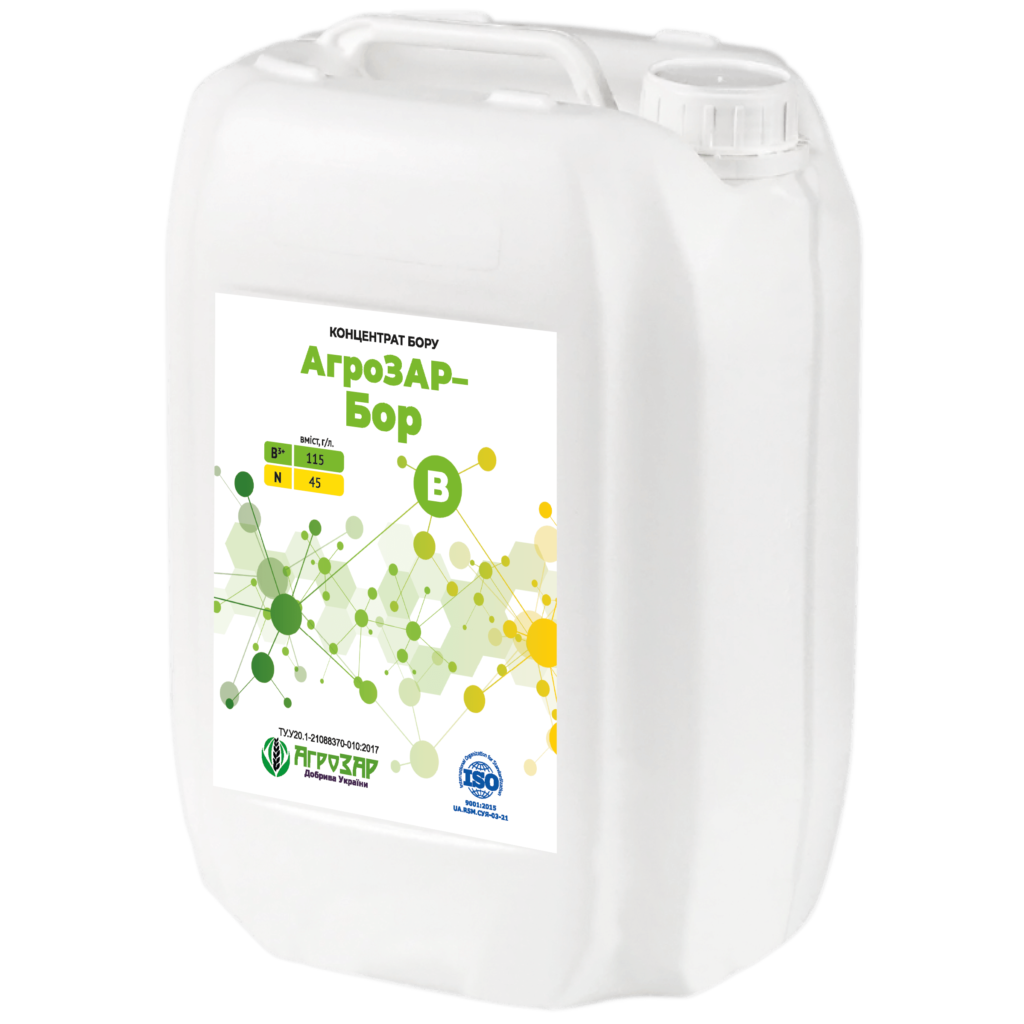
BOR (B) is an important component of RNA and DNA synthesis. Affects consumption
calcium by plants, and also enhances the growth of pollen tubes and germination
pollen, increases the number of flowers and fruits. Responsible for control over
phenolic compounds – toxic products of plant life.
Uncontrolled accumulation of phenolic compounds leads to disorder
the process of protein synthesis, the process of cell division, disruption of the bookmarking process
vegetative and generative organs.
Boron plays a particularly important role for sunflower from the moment of seed germination and onwards,
on regulation of carbohydrate metabolism, synthesis of amino acids and proteins, chlorophyll, processes
fertilization at the time of flowering. Boron is important for the development of the root system
sunflower It improves the flow of carbohydrates to the root system and activates its growth. By
lack of reuse (possibility of moving from old fabrics to new ones), need for boron
for sunflower remains throughout the growing season, especially growing on
moment of flowering To provide boron, it is better to use fertilizers that contain it
is in organic form with monoethanolamine.
Boron deficiency leads to a weakening of the activity of hormones and slows down
transport of sugar.
Signs of boron deficiency:
• Slowed development of growth points.
• Delayed pollen development, reduced number of buds and irregular
fruit development.
• Cracking of fruits with internal necrosis, resulting in larger plants
are intensively affected by various diseases.
| (В) | (N) |
| 115 | 45 |
grams per liter*
COMPATIBILITY WITH OTHER DRUGS should be checked before use. Fertilizer may be incompatible with drugs that in solution form an acidic environment.
STORAGE at a temperature from 0 0 C to + 35 0 C.
WARNING: do not apply for fertilization two weeks before harvest.
WARRANTY PERIOD OF STORAGE: 3 years to give manufacture at storage in original container of the producer.
| Culture | Application periods | The rate of consumption of the drug per day, l / ha |
| Soy | In the presence of (5-7) trifoliate leaves | 0,5 – 1,0 |
| When budding before the first open flowers | 1,0 – 1,5 | |
| Sunflower | In the presence of (5-6) unfolded leaves | 1,0 – 1,5 |
| Corn | The presence of (5 – 8) leaves | 0,5 – 1,0 |
| 2 weeks after the first feeding (if necessary) | 0,5 – 1,0 | |
| Winter rape | In stage (4-6) leaves in autumn | 1,0 – 1,5 |
| In the stage from the presence of (5 – 7) leaves to the beginning of the development of lateral shoots | 1,3 – 1,5 | |
| From budding to flowering. | 1,0 – 1,3 | |
| Sugar beet | In stage (2-3) pairs of leaves | 0,5 – 1,0 |
| Before closing the rows | 1,5 – 2,0 | |
| Other vegetables | Starting with 4 letters | 1,0 – 1,3 |
| (10-14) days after the first feeding | 1,0 – 1,3 | |
| Potato | For (10-14) days after 100% ascent | 1,5 – 3,0 |
| Fruit and berry trees and shrubs | In the phase of appearance of the first inflorescence to the first open flower | 1,3 – 1,4 |
| At the beginning of fruit ripening | 2,5 – 3,0 | |
| When laying flower buds. | 3,0 – 5,0 |