
 Blooming
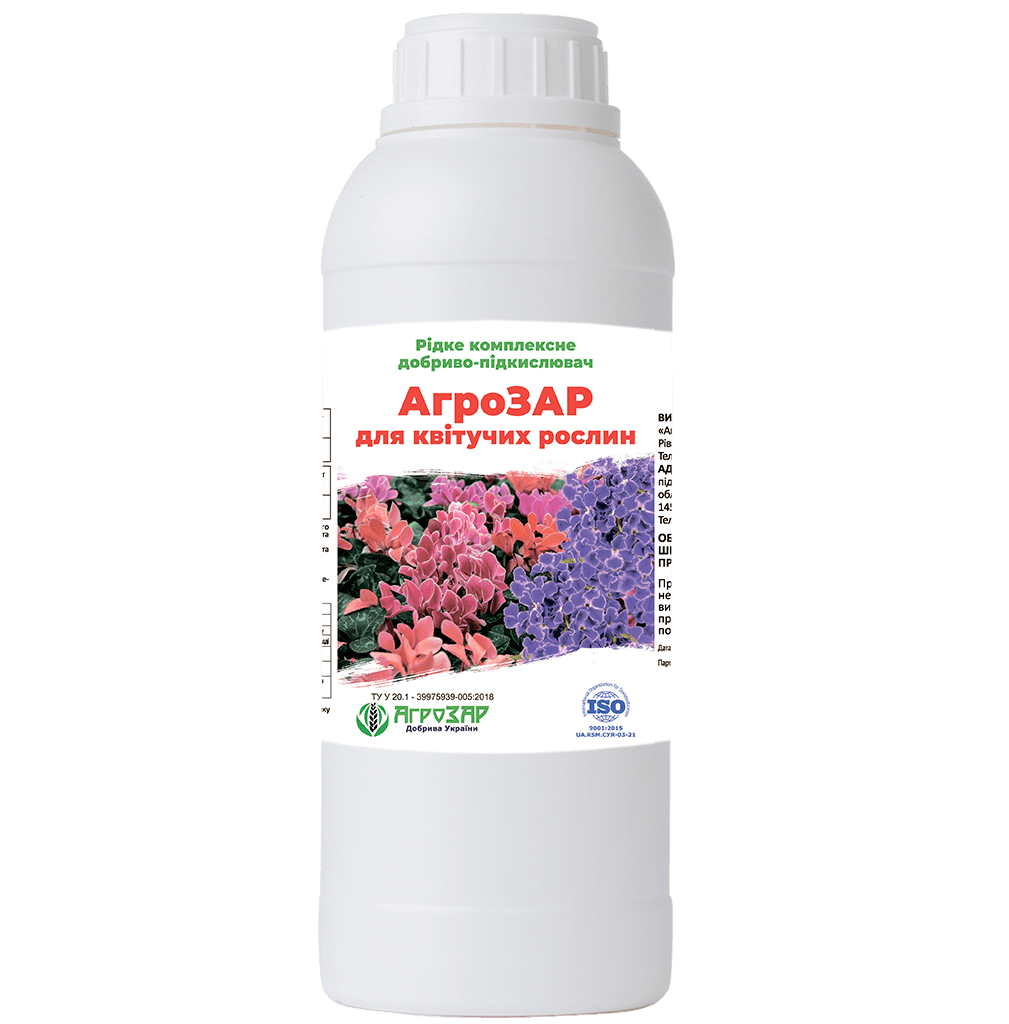
AgroZAR liquid complex fertilizer for flowering plants is mainly intended for the regular supply of nutrients to indoor decorative plants, such as kalanchoe, African violet, amaryllis, anthurium, Persian cyclamen, gardenia and many other types of plants that are in the phase of budding and flowering. It is also used to feed not only indoor plants, but also those growing in backyards or balconies.
Feeding with fertilizer contributes to the formation of a large number of buds, prolongs the flowering time of plants.
Phosphorus is part of nucleoproteins, the main component of the cell nucleus. They participate in the synthesis of proteins, energy exchange, establishment of generative organs, transmission of genetic information and creation of cell membranes. Phosphorus compounds accelerate the transition of crops from the vegetative to the generative phenophase and improve the adaptation of crops to low temperatures.
Potassium helps plants absorb carbon dioxide from the air, ensures water retention in cells. Potassium improves the resistance of crops to air drought, low temperatures, diseases, pests, ensures the transport of photosynthesis products from vegetative organs to fruiting organs. Due to potassium, the synthesis of vitamin C increases, the fruits acquire a brighter color and aroma and are stored longer.
Nitrogen is a component of plant proteins, chlorophyll, DNA (genetic code), enzymes and many other components necessary for plant growth.
| Nitrogen | Phosphorus | Potassium |
| 20 | 50 | 65 |
gram per litres*
FERTILIZER IS NOT PHYTOTOXIC and safe for humans and beneficial entomofauna.
STORE at temperatures from 0 C to + 35 C.
GUARANTEED STORAGE PERIOD: 3 years from the date of manufacture when stored in the manufacturer’s original container.
Before applying, the fertilizer should be diluted with water at the rate of (12-15) ml (one tablespoon) of fertilizer per 3 liters of water.
Water under the root. Fertilize young plants with half of the indicated dose, that is, a tablespoon of fertilizer per (5-6) liters of water.
It is recommended to apply weekly from March to October, and monthly from November to the end of February.

